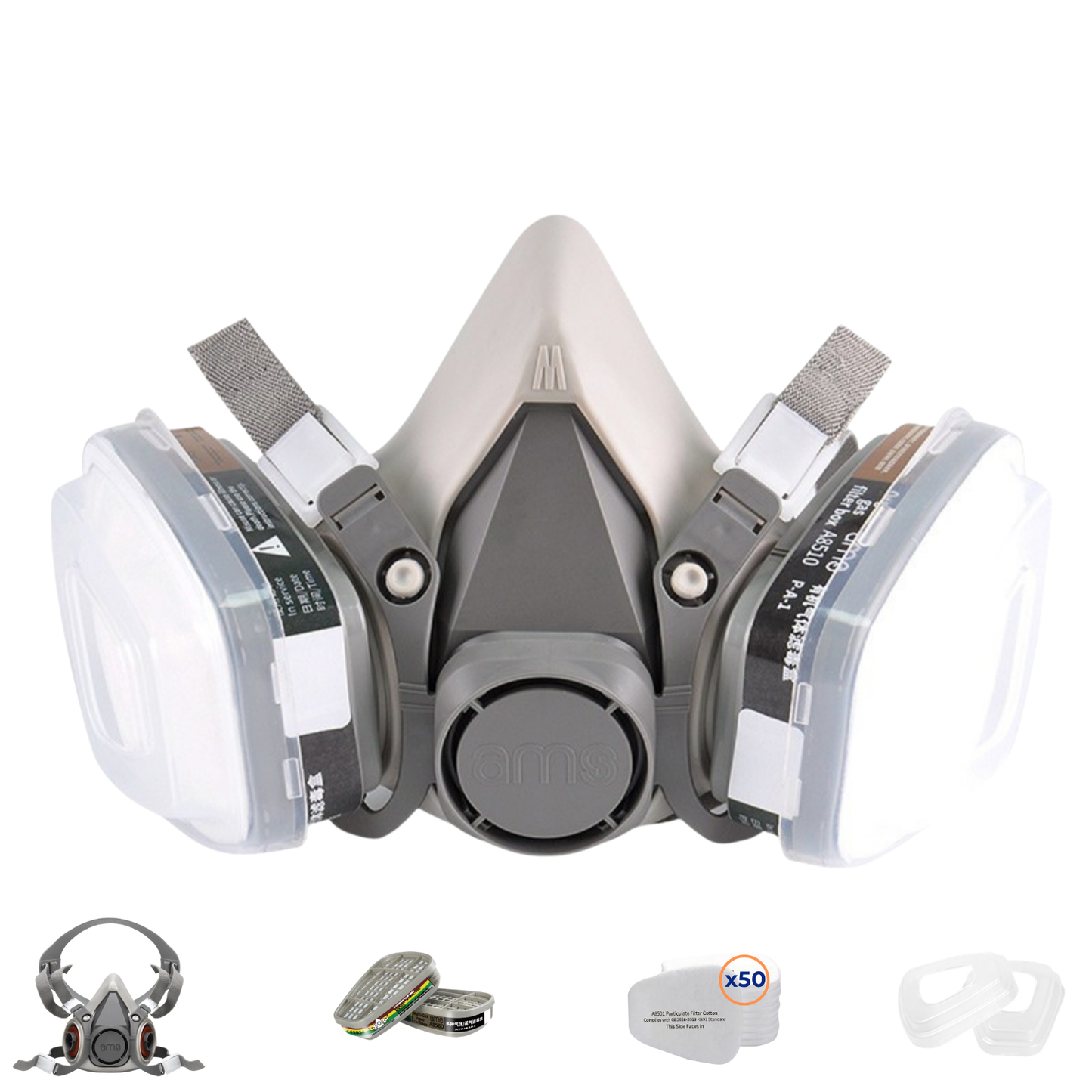
There is nothing quite like the smell of fresh sawdust in the morning. But for serious woodworkers, that smell is a warning sign.
Many woodworkers invest thousands of dollars in high-end table saws, planers, and central dust collection systems. Yet, they often rely on a cheap disposable mask for personal protection. The reality is that fine dust (under 10 microns) escapes even the best filtration systems and lingers in your shop air for hours. It’s time to take respiratory safety as seriously as you take your joinery with the AMS-A620 Respirator.
The Truth About "Fine Dust" and MDF
Visible sawdust is annoying, but invisible dust is dangerous.
- Microscopic Damage: Particles smaller than 2.5 microns (PM2.5) bypass your nose's natural defenses and lodge deep in your lung tissue. Over time, this causes reduced lung function and chronic bronchitis.
- The MDF Hazard: Medium Density Fiberboard (MDF) and Plywood contain Urea-Formaldehyde adhesives. When you cut or sand these materials, you aren't just inhaling wood; you are inhaling known carcinogens. A standard dust mask cannot filter these chemical vapors.
- Toxic Woods: Exotic woods like Cocobolo, Ebony, and Rosewood are known sensitizers that can cause severe allergic reactions and respiratory distress.
Why the AMS-A620 Belongs in Every Woodshop
The AMS-A620 solves the three biggest complaints woodworkers have about wearing masks:
1. Zero Fogging = Safer Cuts
When you are operating a table saw or band saw, clear vision is a matter of keeping your fingers. Cheap masks vent hot breath upwards, fogging your safety glasses instantly.
The AMS-A620 features a downward-directed exhaust valve. This keeps your glasses crystal clear, allowing you to see your cut line perfectly while staying protected.
2. Comfort for the Long Haul
Sanding a large tabletop can take hours. A paper mask gets soggy, hot, and itchy. The AMS-A620 is made from soft, food-grade silicone that stays cool and maintains a comfortable seal, even during marathon sanding sessions.
3. Double Defense
Woodworking often involves finishing (staining, varnishing, lacquering).
- Phase 1 (Sanding): The cotton pre-filters trap the fine wood dust.
- Phase 2 (Finishing): The activated carbon cartridges absorb the toxic fumes from stains and polyurethanes.
It is one mask that handles the entire project from rough lumber to final finish.
Disposable Masks vs. AMS-A620 in the Shop
| Criteria | Standard N95/Dust Mask | AMS-A620 Respirator |
|---|---|---|
| Fine Dust Seal | Poor (Leaks around nose) | Excellent (Silicone Seal) |
| Glass Fogging | High Risk | No Fog (Downward Vent) |
| MDF/Chemical Fumes | No Protection | Full Protection |
| Durability | Single Use | Reusable for Years |
FAQ for Woodworkers
Q: How do I clean wood dust off the mask?
A: Use compressed air (low pressure) to blow dust off the outside of the mask and pre-filters. Wipe the silicone facepiece with a damp cloth. Never blow air inside the filters as this can damage the filtration media.
Q: Can I wear this with a face shield?
A: Yes. The low-profile design of the AMS-A620 allows it to fit comfortably under most standard turning visors and grinding face shields.
Q: When should I change the filters?
A: In a dusty shop, change the white cotton pre-filters when it becomes hard to breathe (usually every 1-2 weeks of heavy use). Change the carbon cartridges when you can smell wood odors or solvents through the mask.
Protect Your Most Important Tool: Your Lungs
You can replace a saw blade, but you can't replace your lungs. Make the AMS-A620 a mandatory part of your shop routine.