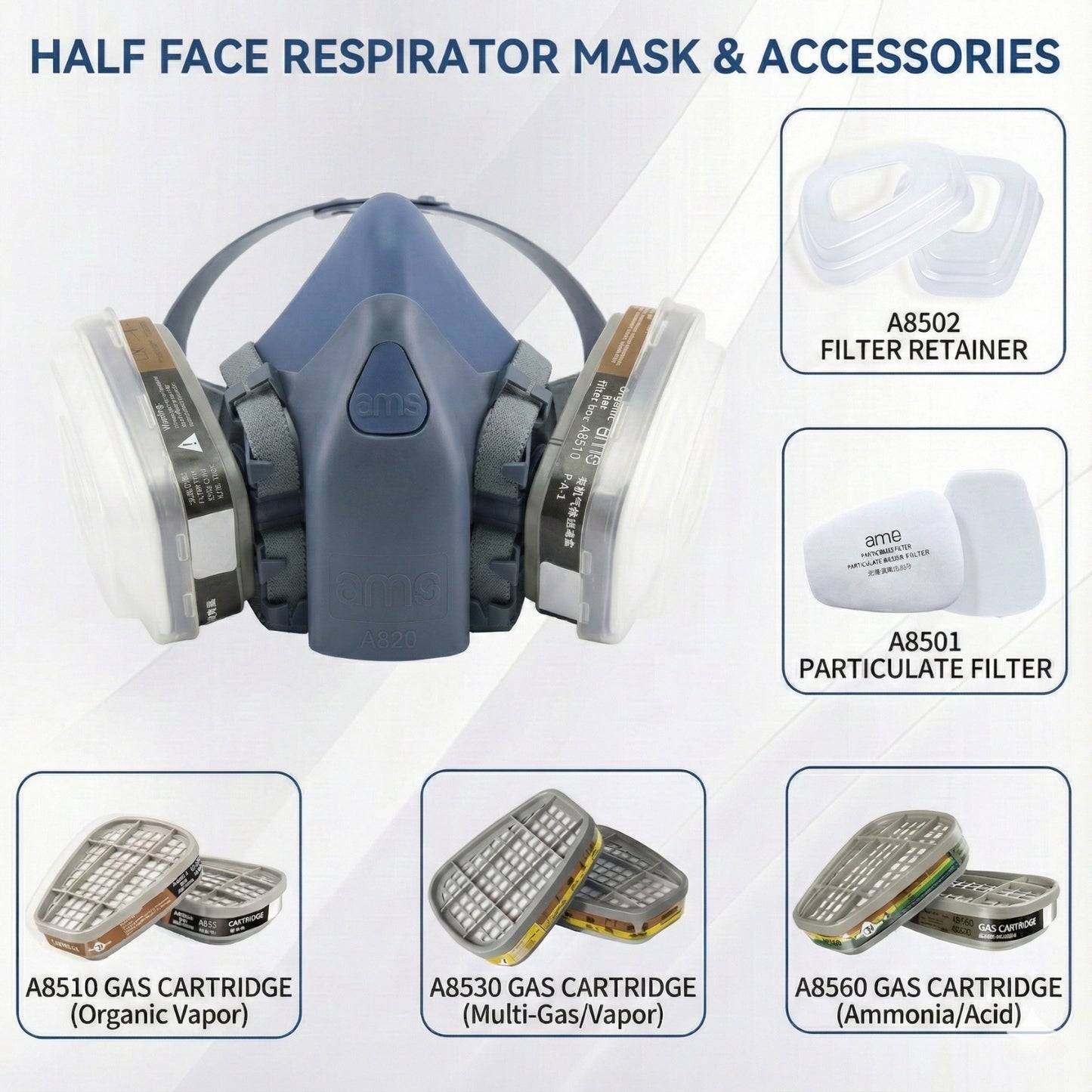
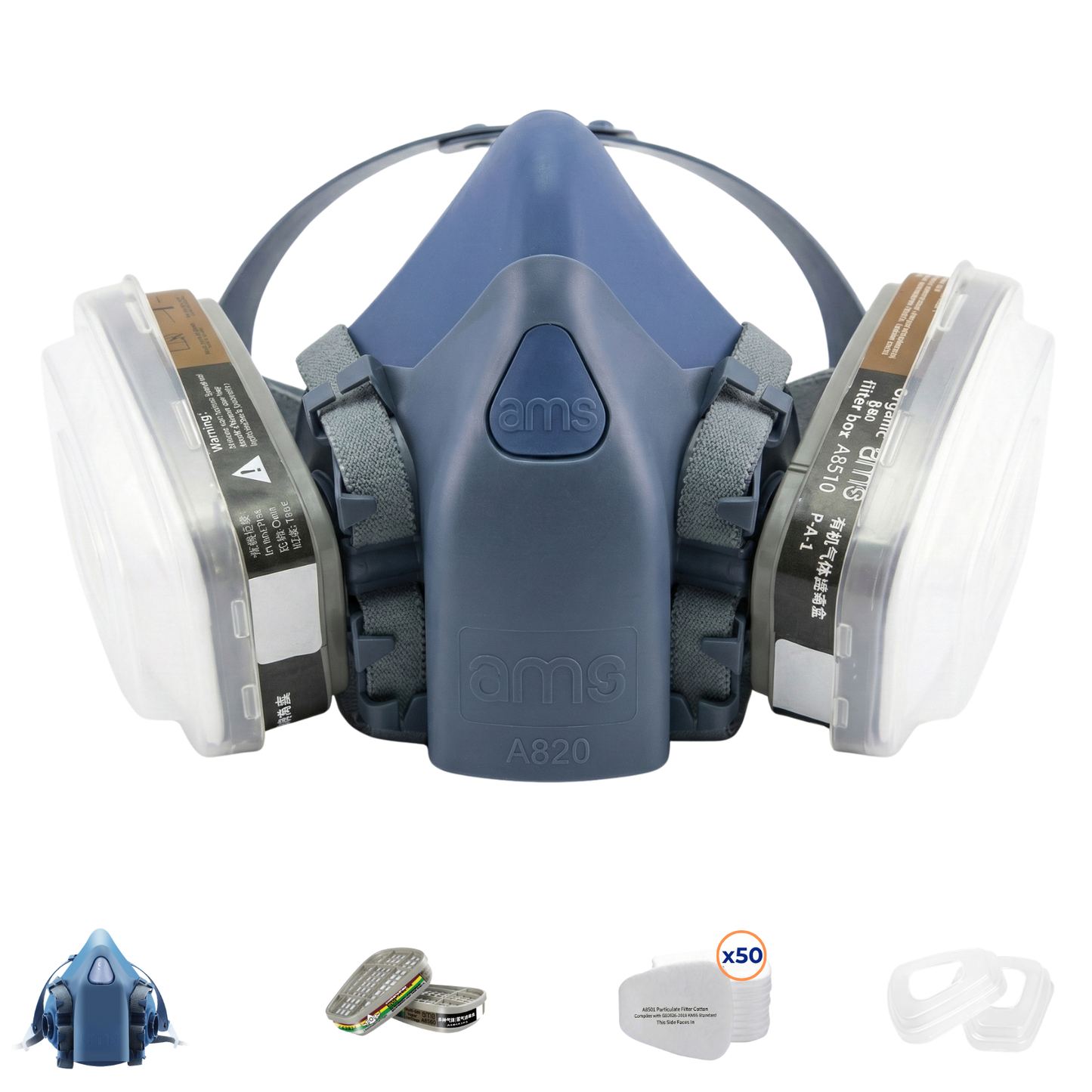
In a laboratory setting, precision is everything. You adhere to strict protocols for your experiments, keep your glassware spotless, and calibrate your instruments daily. Yet, when it comes to personal protection against volatile organic compounds (VOCs) and aldehydes, many researchers settle for outdated rubber masks.
The AMS-A820 Liquid Silicone Respirator represents a generational leap in lab safety. It brings medical-grade material science to your PPE, ensuring that your respiratory protection is as advanced as the research you are conducting.
The Problem with "Sticky" Rubber in Labs
Standard respirators are typically made of Thermoplastic Elastomer (TPE) or natural rubber. While effective for construction sites, they have significant drawbacks in a chemical environment:
- Chemical Absorption: Rubber is porous. Over time, it can absorb solvent vapors (like Xylene or Acetone), causing the mask to retain odors even after you leave the lab.
- Decontamination Issues: The microscopic texture of rubber traps contaminants, making it difficult to thoroughly sanitize between shifts.
- Degradation: Harsh cleaning agents like Bleach or Isopropyl Alcohol (IPA) can cause rubber to crack or become brittle prematurely.
The Liquid Silicone Advantage for Scientists
The AMS-A820 is crafted from Liquid Silicone Rubber (LSR), a material prized in the medical industry for its purity and resilience.
1. Non-Porous "Easy-Clean" Surface
LSR has an incredibly smooth surface finish. Chemicals, biological agents, and fine powders do not stick to it. This means you can wipe down your AMS-A820 with an alcohol wipe or disinfectant, and it returns to a clinically clean state in seconds. No lingering smells, no cross-contamination.
2. Focus on the Experiment, Not the Mask
Experiments often require hours of intense focus. A heavy, uncomfortable mask is a distraction that leads to errors. The AMS-A820 is lighter and softer than traditional masks, reducing facial fatigue. The "zero-pressure" seal allows you to wear it for a 4-hour titration marathon without feeling the urge to rip it off.
3. Hypoallergenic for Daily Wear
Lab technicians wear PPE every single day. Repeated contact with low-grade rubber can trigger Contact Dermatitis. The AMS-A820 is free from latex and plasticizers, making it safe for the most sensitive skin types.
When is a Fume Hood Not Enough?
Fume hoods are the first line of defense, but they aren't foolproof. You need personal respiratory protection when:
| Scenario | Risk Factor |
|---|---|
| Transporting Chemicals | Moving solvents outside the hood creates spill risks. |
| Cleaning Glassware | Open sinks release vapors from Acetone/Methanol washes. |
| Equipment Maintenance | Opening rotary evaporators or HPLC lines releases trapped fumes. |
| Field Work | Collecting samples onsite where no ventilation exists. |
FAQ: Lab & Chemical Use
Q: Is the A820 resistant to Acetone and IPA?
A: Liquid Silicone has excellent resistance to common lab cleaning agents like Isopropyl Alcohol and diluted bleach. While prolonged submersion in strong ketones (like Acetone) should be avoided for any polymer, occasional splashes or wiping down won't degrade the A820 like it would a cheap rubber mask.
Q: Can I autoclave this mask?
A: While the silicone facepiece itself is heat resistant, we recommend chemical disinfection or warm soapy water washing to preserve the integrity of the plastic valve components and straps.
Q: Which filters should I use for general lab work?
A: For most organic solvents (Ethanol, Xylene, Ether), use our Organic Vapor Cartridges (Yellow/Black Label). If you are dealing with acidic gases or ammonia, ensure you select the specialized Multi-Gas cartridge.
Professional Gear for Professional Minds
Your health is your most valuable asset in the lab. Upgrade to the respirator that meets the high standards of your profession. Clean, comfortable, and chemically resistant—that's the AMS-A820 promise.