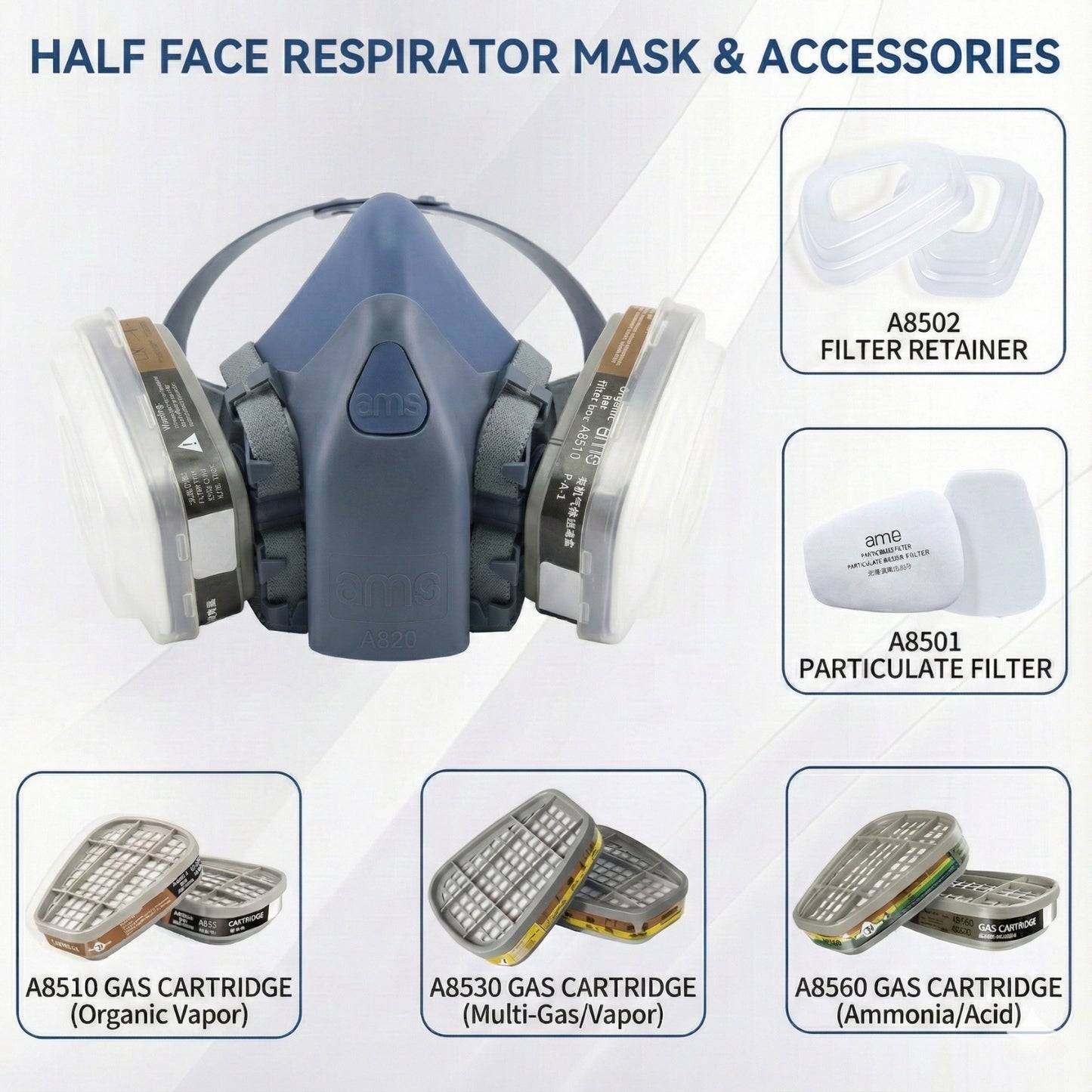
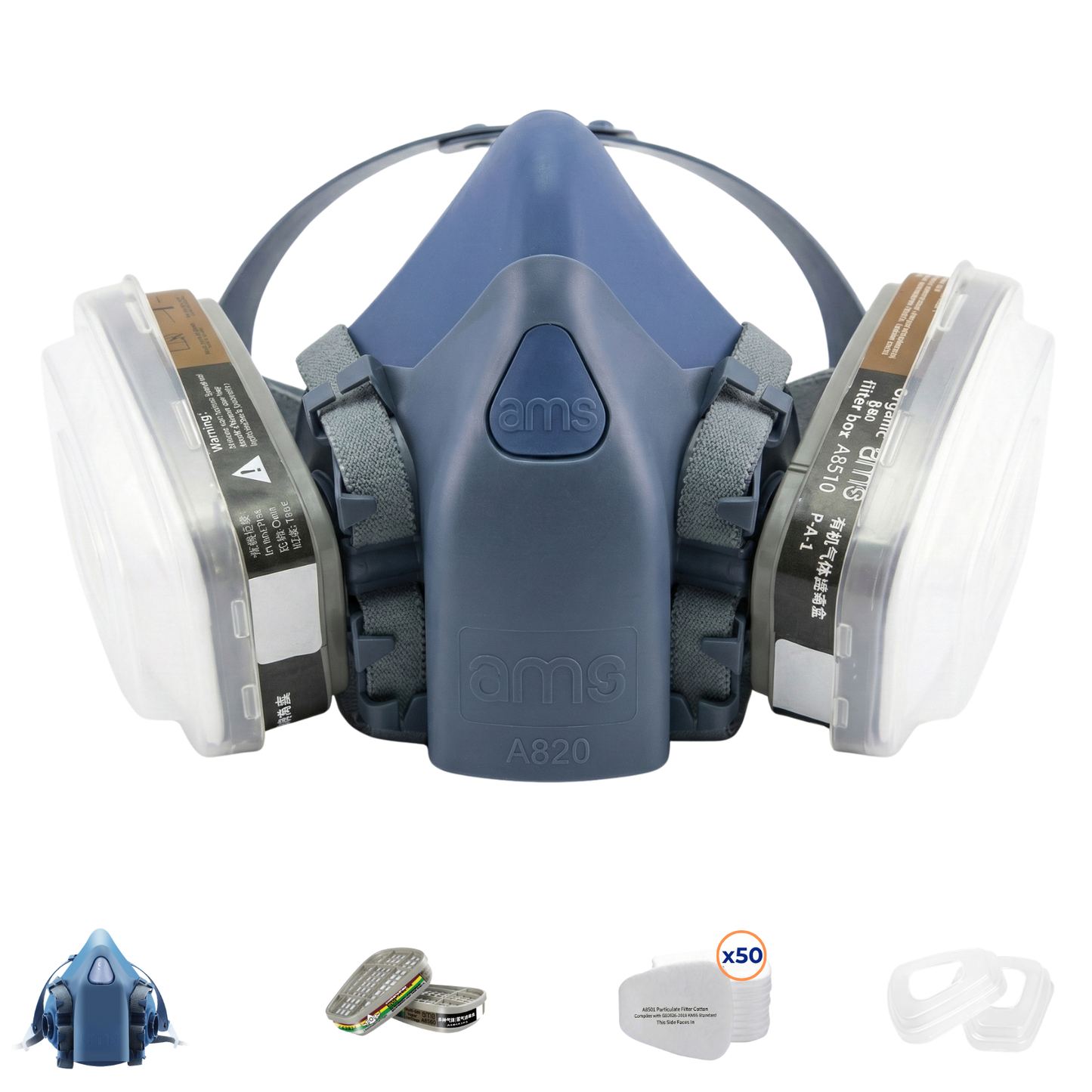
If you work in insulation, you know the struggle. You are crawling through a 130-degree attic, navigating trusses, and breathing in air filled with fiberglass shards or chemical off-gassing.
In these brutal conditions, a cheap disposable mask is worse than useless—it’s a hazard. It gets soggy with sweat, slips off your nose, and lets fibers sneak in. For professional insulators, the AMS-A820 Liquid Silicone Respirator isn't a luxury; it’s the only way to get through the day comfortably and safely.
The Twin Hazards: Foam & Fibers
Insulation materials are great for houses but terrible for lungs.
- Fiberglass & Mineral Wool: Tiny glass shards float in the air when you unroll batts or blow loose-fill. Inhaling them causes coughing, "glass lung," and permanent scarring.
- Spray Foam (SPF): The A-side and B-side mixture creates Isocyanates. While fresh air supply is required for the sprayer, helpers and trimmers need robust respiratory protection against residual vapors and trimming dust.
Why the AMS-A820 is the Insulator's Best Friend
We engineered the A820 to solve the specific pain points of working in tight, hot spaces.
1. It Stays Put in the Heat
Attics in the summer are dangerously hot. When you start sweating buckets, standard rubber masks slide around, breaking the seal.
The AMS-A820 is made of Liquid Silicone with a matte, anti-slip texture. It grips your sweaty skin securely. You can look up, down, or twist your head to reach a corner without the mask popping loose and letting fiberglass in.
2. "Non-Stick" Cleaning
If you work with Spray Foam, you know that overspray gets everywhere. On a standard rubber mask, cured foam bonds permanently.
Liquid Silicone is chemically resistant and has a low surface energy. If foam mist lands on the facepiece, it often peels right off once cured, or cleans up easily with solvent wipes, keeping your gear professional and functional.
3. Maximum Breathability
When you are hauling heavy bags of insulation, you are breathing hard. The AMS-A820 features a high-flow intake and exhaust system designed to minimize breathing resistance. This reduces heart rate and fatigue, allowing you to finish the job faster without feeling like you are suffocating.
Comparison: The Attic Test
| Challenge | Disposable / Rubber Mask | AMS-A820 (Liquid Silicone) |
|---|---|---|
| Sweat Management | Soggy, causes slipping | Secure anti-slip grip |
| Fiberglass Itch | Fibers trap under edges | Tight seal keeps irritants out |
| Foam Overspray | Sticks permanently | Peels / Wipes off easier |
| Vision | Fogs up safety glasses | Downward exhaust (No fog) |
FAQ for Insulation Pros
Q: Which filters should I use for Fiberglass?
A: For Fiberglass and Mineral Wool, use the P100 Particulate Filters (Magenta discs). They stop 99.97% of fibers and dust.
Q: Which filters for Spray Foam (SPF)?
A: If you are a helper or trimmer working near SPF application, use Organic Vapor Cartridges (Black/Yellow) with P100 Pre-filters. Note: Direct high-pressure sprayers typically require supplied air systems per OSHA, but the A820 is perfect for support crew and clean-up.
Q: Can I wear this under a Tyvek hood?
A: Yes. The low-profile strap system is designed to be worn comfortably underneath the hood of a disposable coverall suite, ensuring full head and lung protection.
Comfort in the Uncomfortable Zones
Attics and crawl spaces are hard enough without fighting your equipment. Upgrade to the AMS-A820 and experience the difference that premium Liquid Silicone makes in the heat of the job.