

AMS Armor · Knowledge & Resources
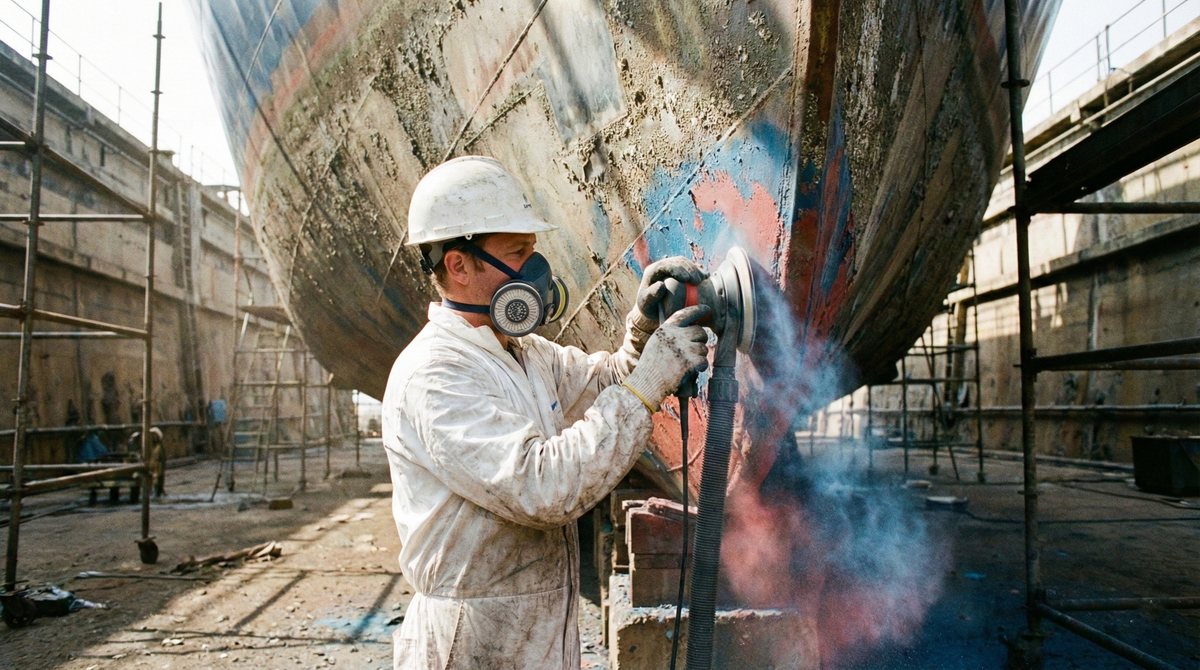
Boat Maintenance: Plan for Sanding Dust, Resins and Coatings
Consider the materials and work area before choosing respiratory equipment for a marine maintenance project.
In this guide
At a glance
- Identify existing and new coating systems.
- Plan collection of sanding debris.
- Assess enclosed work areas before entry.
Identify the coating and repair system
Bottom coatings, old paint layers, fiberglass, resin and gelcoat can present different handling and inhalation issues. Obtain the product information and investigate existing coatings before disturbing them. Plan debris collection and appropriate cleanup as well as ventilation. A boatyard odor does not establish the identity or level of an exposure.
Evaluate the work area before choosing a mask
An open deck, a sheltered repair area and an enclosed hull are not interchangeable. Restricted or unknown atmospheres need their own assessment and entry arrangements. Do not treat a half-face paint kit as an all-in-one marine safety solution. Review the exact task, materials and equipment limitations before working in any confined or poorly ventilated area.
A practical planning checklist
- List preparation materials, coatings, hardeners, thinners and cleanup products before starting.
- Separate dusty preparation from spray application and chemical handling in the work plan.
- Check ventilation, overspray travel and whether nearby people could be affected.
- Confirm the required respiratory configuration for each stage instead of carrying one recommendation across the project.
Equipment to explore
Use the current product information to compare the configuration, included components and replacement parts. Check the exact variant before ordering; kit contents can differ even when the facepiece model is the same.
Explore the AMS A420P configuration and browse matching filters and replacement parts. Confirm the stated applications and compatibility before deciding whether a configuration meets your project requirements.
The A420P uses the A4520 system. Keep its cartridges, pads and retainers matched to the listed components; do not assume compatibility with the A85-series used in other AMS kits.
Before your next project
Keep a short equipment record: the model, selected components, instructions and replacement information. Revisit it when the material, method or work area changes. If a specification is unclear, collect the product details before choosing an alternative rather than substituting parts by appearance.
Contact AMS about product details and compatibility or explore the Safety Journal for more equipment, fit and maintenance guides.
Further reading
NIOSH: respirator selection and use. General guidance does not establish approval or suitability of a particular AMS product configuration.
Continue reading
View all guides →
DIY Car Painting: Aerosols, 2K Coatings and Respirator Limits
Know why a general paint-kit recommendation cannot cover every automotive aerosol or two-component coating.
Read guide
Garage Epoxy Floors: Preparation, Ventilation and PPE Planning
Separate grinding and surface preparation from coating application when planning an epoxy-floor project.
Read guide
Aerosol Art: Ventilation, Overspray and Equipment Planning
Plan mural and aerosol-painting sessions around the coating, location and people near the work area.
Read guide