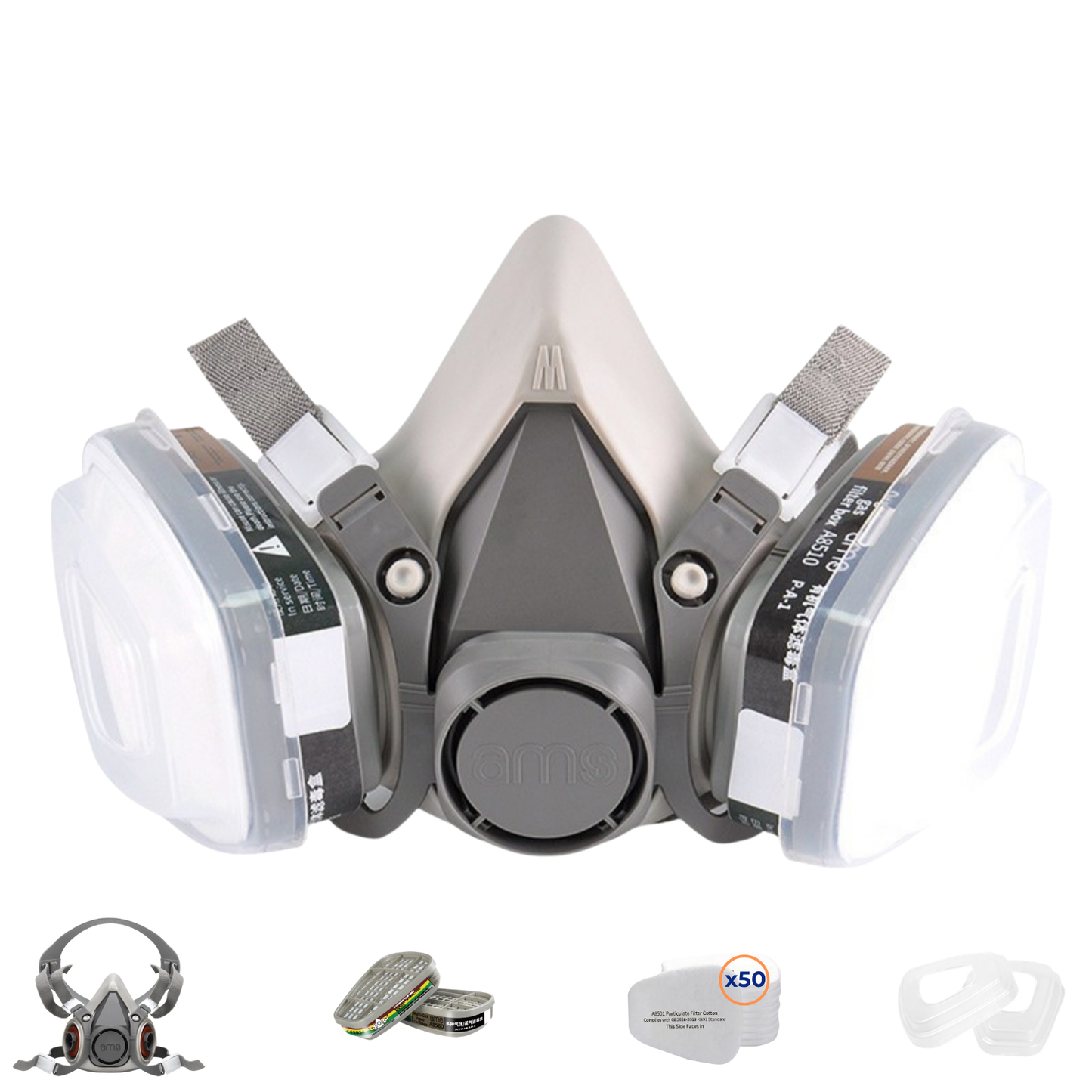
Investing in a professional respirator like the AMS-A620 is the first step toward safety. The second step? Keeping it clean.
A respirator that is clogged with dust, dirty with paint, or stored improperly can become a breeding ground for bacteria or lose its ability to seal properly. In this guide, we will walk you through the proper maintenance routine to ensure your gear protects you effectively for years to come.
The Golden Rule: Never Wash the Filters
Step-by-Step: Cleaning Your AMS-A620 Facepiece
You should perform a quick wipe-down after every use, and a deep clean once a week (or after heavy use).
Step 1: Disassemble
Remove the filter cartridges and cotton covers from the mask body. Set them aside in a dry area. Remove the head straps if possible (optional, but helps with deep cleaning).
Step 2: Wash with Warm Water
Immerse the silicone facepiece in warm water (not exceeding 120°F / 49°C). Use a mild, neutral detergent or soap.
- Do NOT use lanolin-based soaps (oils can affect the seal).
- Do NOT use solvents like acetone, bleach, or paint thinner, as these will degrade the silicone and compromise safety.
Step 3: Scrub Gently
Use a soft cloth, sponge, or a soft-bristled brush to gently scrub away sweat, facial oils, and grime from the inside and outside of the mask. Pay attention to the exhalation valve area where moisture collects.
Step 4: Rinse and Dry
Rinse thoroughly with fresh warm water to remove all soap residue. Shake off excess water and let the mask air dry in a clean, non-contaminated area. Do not use a hair dryer or place it in direct sunlight, as high heat can warp the shape.
When to Replace Your Filters?
This is the most common question we get at AMS Armor. Since you cannot "see" when a carbon filter is full, rely on these indicators:
- The Smell/Taste Test: If you are wearing the mask properly fitted and you can smell or taste the chemicals/fumes you are working with, the carbon is saturated. Replace immediately.
- Breathing Resistance: If it becomes difficult to inhale, the particulate filters (cotton pads) are likely clogged with dust. Change the pre-filters.
- Damage: If the cartridge is cracked or dented, replace it.
General Rule of Thumb: For regular daily use, replace pre-filters weekly and cartridges monthly. For occasional DIY use, they may last up to 6 months.
Storage: The Silent Killer of Respirators
Did you know your filters can "go bad" even when you aren't using them? Activated carbon acts like a sponge; if you leave your mask sitting on a workbench, it will continue to absorb moisture and vapors from the air until it is full.
How to store properly:
- When dry, place the mask and filters inside an airtight Ziplock bag or a sealed plastic container.
- Store in a cool, dry place away from direct sunlight and chemical storage areas.
- Ensure the rubber straps are not twisted or stretched during storage to maintain elasticity.
Need New Filters?
Don't compromise your lungs with an old filter. Stock up on genuine AMS replacements to ensure the perfect fit and filtration efficiency.