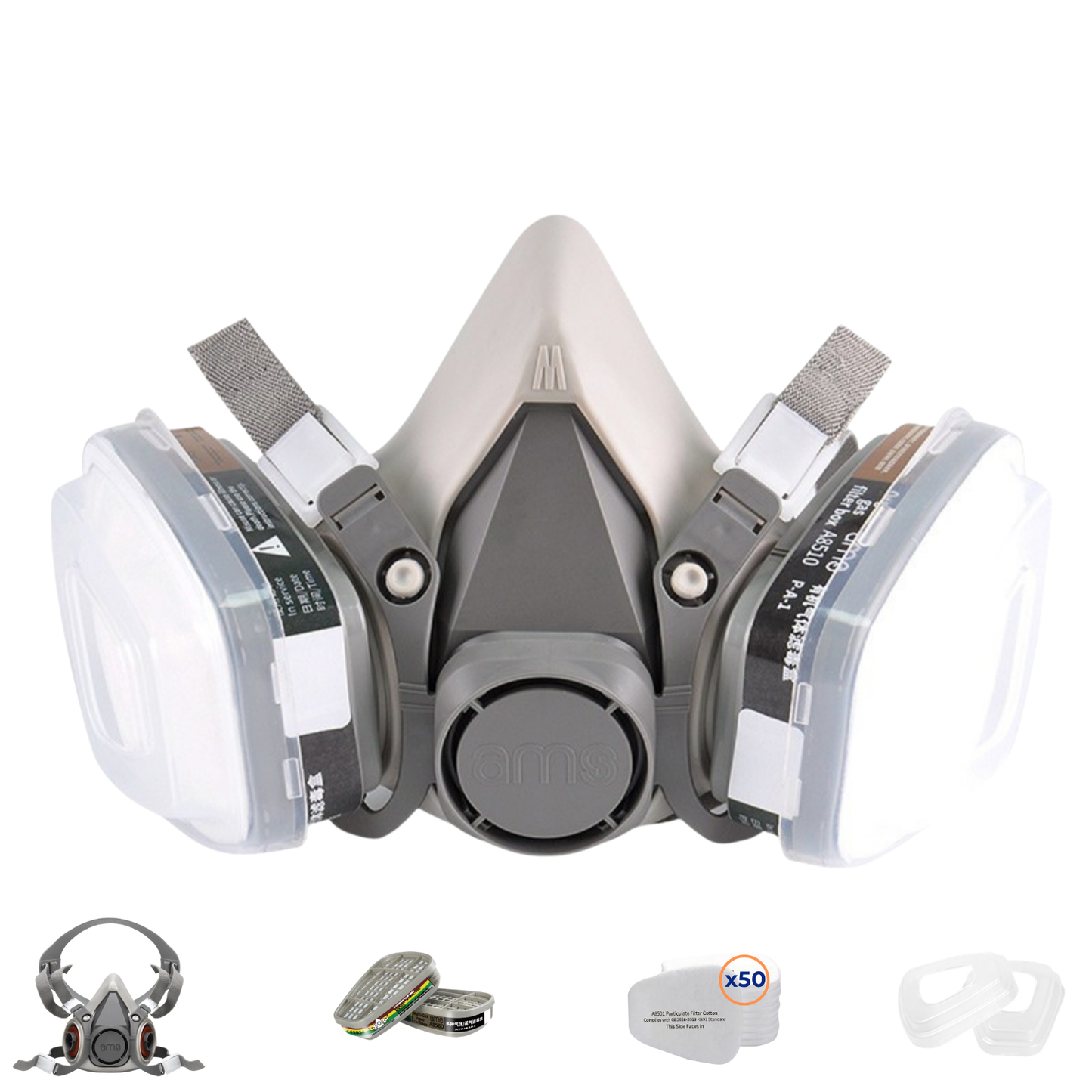
Discovering black mold in your bathroom, basement, or attic is a homeowner's nightmare. The instinct is to grab a bottle of bleach, a scrub brush, and a cheap paper mask to "get it over with."
Stop right there. Mold remediation is a hazardous biological process. When you scrub mold, you release millions of microscopic spores into the air. Worse, the chemicals used to kill mold (like concentrated bleach) release toxic chlorine gas. To survive this double threat, you need more than a paper mask—you need the AMS-A620 Respirator.
The Double Threat: Spores + Chemicals
Most people understand they shouldn't breathe in mold. But they often forget about the cleaning agents. Here is why a standard N95 or surgical mask fails in this scenario:
- Problem 1: The Spores (Particulates). Mold spores are tiny (3-40 microns). While an N95 can catch them theoretically, any gap in the seal allows these spores to bypass the filter and enter your lungs, potentially triggering asthma or severe allergic reactions.
- Problem 2: The Fumes (Gases). This is where N95s fail completely. If you use bleach, ammonia, or specialized fungicides, an N95 lets 100% of those vapors through. Breathing bleach fumes in a small, unventilated bathroom can burn your airways instantly.
How the AMS-A620 Solves Both Problems
The AMS-A620 is a "Dual-Cartridge" system designed for exactly this kind of mixed-hazard environment.
1. The Airtight Seal
Mold spores seek the path of least resistance. The AMS-A620 features a soft silicone facepiece that creates a vacuum seal against your skin. This ensures that every breath you take is forced through the filters, not leaking in from the sides.
2. Activated Carbon Defense
The core of our protection lies in the Activated Carbon filters. These chemically adsorb the harsh fumes from bleach and mold killers, neutralizing the smell and the toxicity. You can clean the dirtiest basement without smelling a thing.
3. Eye Protection Compatibility
Mold spores can enter through your eyes, causing irritation. You need to wear safety goggles. The AMS-A620's low nose bridge allows goggles to fit snugly without gaps, and the downward exhaust valve prevents them from fogging up while you work.
A Step-by-Step Safety Guide for Mold Cleanup
⚠️ Before You Start
If the mold covers an area larger than 10 square feet (roughly 3ft x 3ft), the EPA recommends hiring a professional contractor. For smaller DIY jobs, follow these steps:
- Isolate the Area: Seal off the room with plastic sheeting to prevent spores from spreading to the rest of the house.
- Gear Up: Put on your AMS-A620 Respirator, safety goggles, and rubber gloves before entering the area. perform a negative pressure seal check.
- Ventilate (Carefully): Use an exhaust fan to blow air OUT of the window. Do not use a fan that blows air INTO the room, as this spreads spores.
- Dampen, Don't Dust: Spray the moldy area with water or cleaner before scrubbing. Dry scrubbing launches spores into the air.
- Clean & Discard: Bag all waste in heavy-duty trash bags. Wipe down your AMS-A620 with a damp cloth immediately after exiting the work zone.
Frequently Asked Questions
Q: Can I wash the filters after cleaning mold?
A: No. Once the cotton pre-filters are loaded with mold spores, they are contaminated biohazards. Dispose of the filters in a sealed bag and install fresh ones for the next use. Do NOT try to clean them.
Q: I have a beard. Is it safe?
A: Mold spores are unforgiving. Facial hair breaks the seal of the mask. For hazardous biological cleanup, we strongly recommend shaving the area where the mask seals to ensure zero leakage.
Q: Does this mask filter the "musty" smell?
A: Yes! The activated carbon layer is excellent at removing organic odors. If you start to smell the mustiness again, it’s a sign that your carbon filters are full and need replacement.
Clean Your Home, Protect Your Health
Mold is tough, but you need to be tougher. Equip yourself with the AMS-A620 to ensure that when you clean the mold, you aren't bringing it into your body.