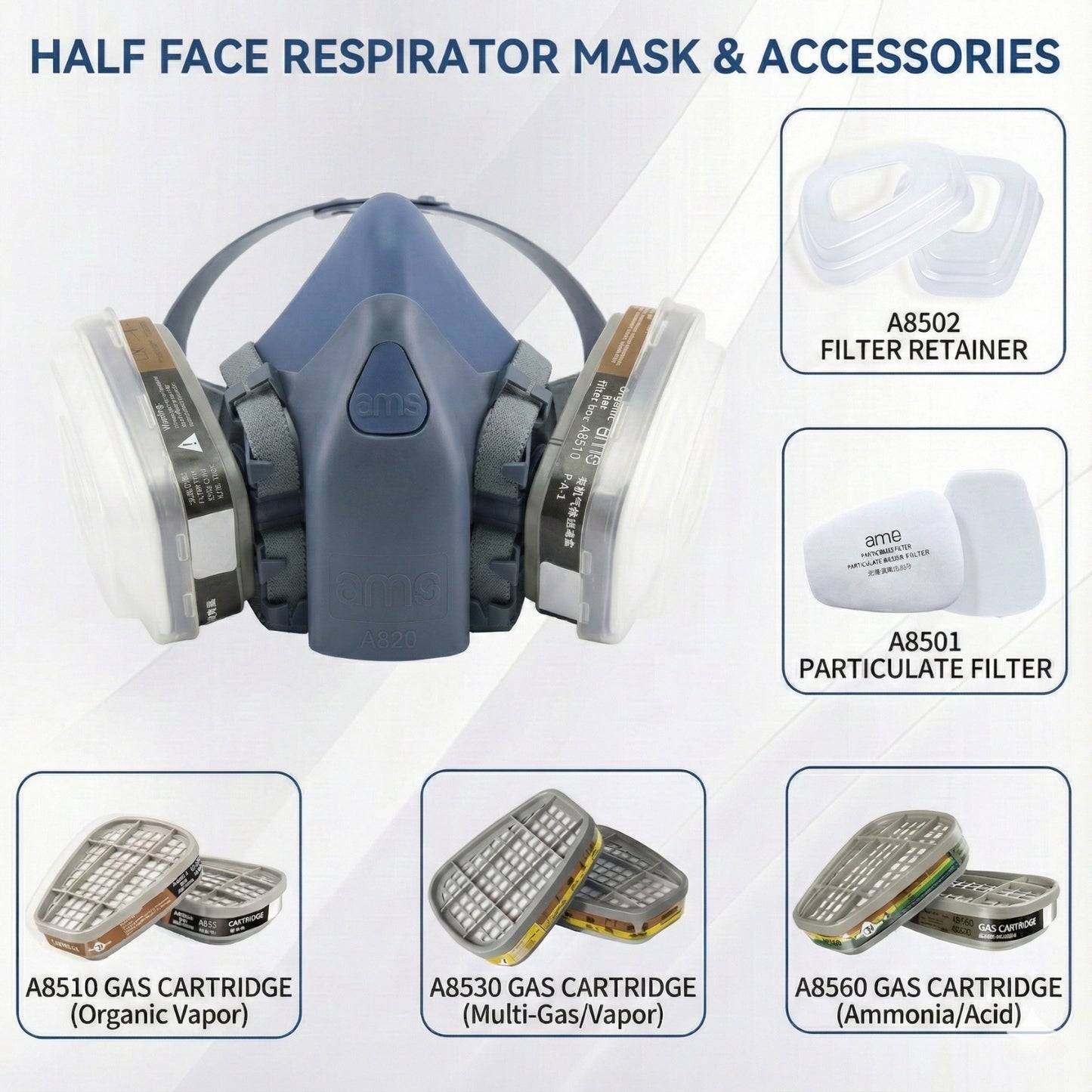
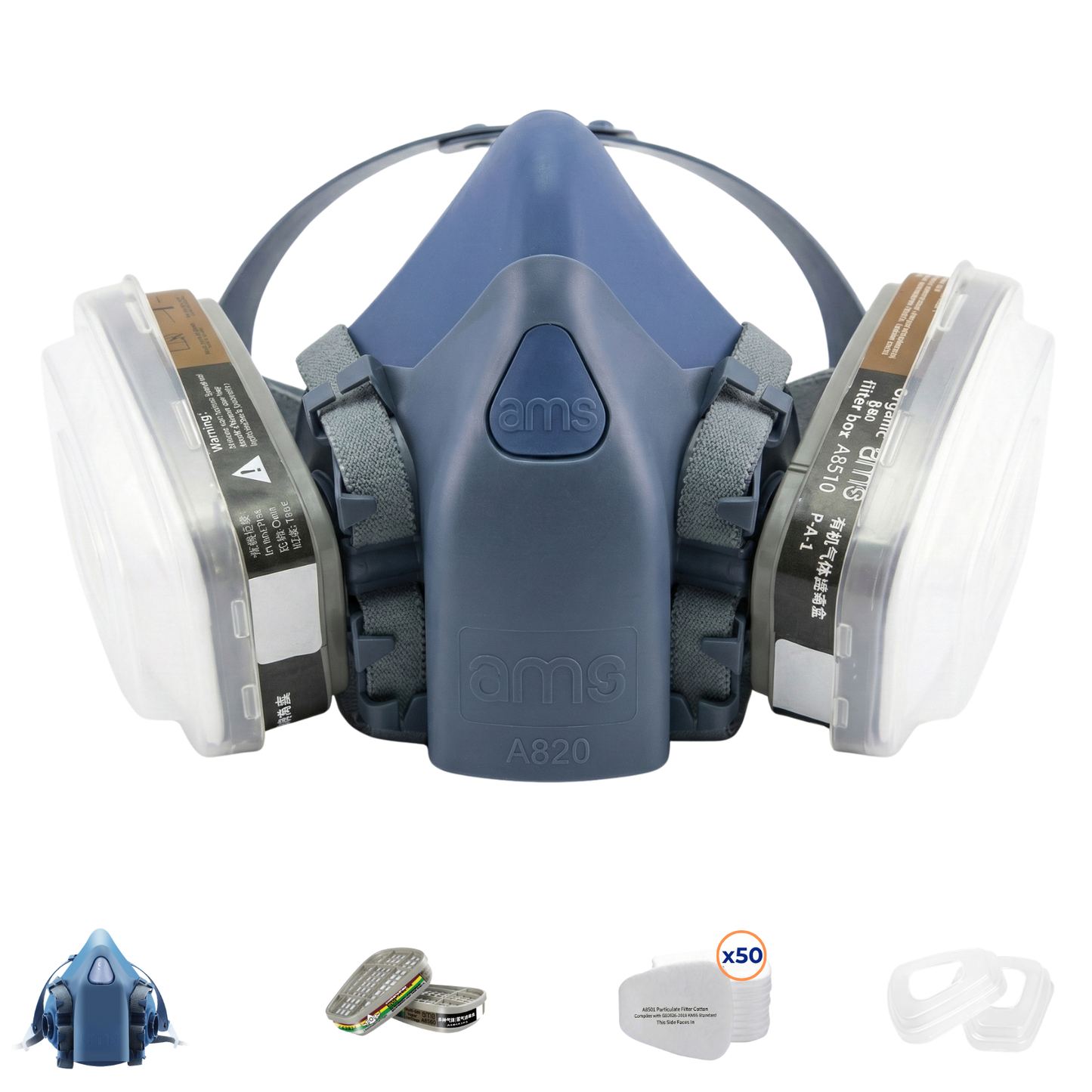
At AMS Armor, we pride ourselves on offering professional-grade protection for everyone, from the weekend DIY warrior to the industrial shift worker. But when you browse our store, you might face a difficult choice: Should I get the standard AMS-A620 or upgrade to the premium AMS-A820?
Both masks offer certified filtration and airtight seals. However, they are built for different users and different durations of use. In this guide, we strip away the marketing jargon and compare them head-to-head to help you decide.
The Contenders at a Glance
The AMS-A620
The "Reliable Workhorse"
Made from high-quality food-grade silicone. It is robust, durable, and gets the job done at an affordable price point. Perfect for general construction and DIY.
The AMS-A820
The "Comfort King"
Made from Liquid Silicone Rubber (LSR). It is softer, lighter, and designed for extreme long-term wear. Ideal for professionals with sensitive skin or 8+ hour shifts.
Deep Dive: The 3 Key Differences
1. Material Science (Solid vs. Liquid Silicone)
This is the biggest difference.
- AMS-A620: Uses traditional solid silicone. It feels similar to a high-quality rubber band—sturdy and elastic. It holds its shape well but creates more tension against the face to maintain a seal.
- AMS-A820: Uses Liquid Silicone Rubber (LSR). This material is injected into molds in a liquid state, allowing for thinner, more intricate designs. It feels closer to human skin or soft gel. It conforms to your face with almost zero resistance.
2. The "Mask Face" Factor
We have all been there: you take off your respirator after 2 hours of sanding, and you have deep red lines etched into your cheeks that last for an hour.
Because the A620 is thicker, it requires tighter strap pressure to seal, which can cause these pressure marks. The A820, being incredibly soft, seals effortlessly. It "floats" on your face, significantly reducing or eliminating post-wear indentation.
3. Durability and Aging
If you leave a standard rubber mask in a hot garage for a summer, it might get stiff or brittle.
- A620: Great durability, but like all solid silicone, it can harden slightly over years of UV exposure.
- A820: LSR is chemically inert and highly resistant to extreme temperatures and UV light. It will remain soft and flexible significantly longer than standard materials, making it a better long-term investment.
Comparison Table: Specs Breakdown
| Feature | AMS-A620 | AMS-A820 |
|---|---|---|
| Material | Food-Grade Silicone | Liquid Silicone Rubber (LSR) |
| Softness | Medium/Firm | Ultra-Soft |
| Recommended Use Time | 1-4 Hours | 4-12 Hours (All Day) |
| Skin Sensitivity | Good | Excellent (Hypoallergenic) |
| Filter Compatibility | Standard Bayonet | Standard Bayonet (Same) |
| Price | Budget Friendly ($) | Premium ($$) |
Which One Should You Buy?
✅ Choose the AMS-A620 if:
- You are a DIY enthusiast, homeowner, or hobbyist.
- You only wear the mask for short tasks (under 2 hours).
- You are looking for the most cost-effective solution without compromising safety.
✅ Choose the AMS-A820 if:
- You are a professional (painter, welder, industrial worker).
- You wear your mask for half a day or more.
- You have sensitive skin or are prone to "maskne" (acne from masks).
- You view your PPE as a long-term investment.
Frequently Asked Questions
Q: Do both masks use the same filters?
A: Yes! We designed the AMS ecosystem to be interchangeable. If you upgrade from an A620 to an A820, you can keep using your existing stock of AMS cartridges and cotton filters.
Q: Is the A820 harder to clean?
A: Actually, it is easier. Liquid silicone has a smoother surface finish than solid silicone, meaning dust and paint mist are less likely to stick to it, and it wipes down faster.
The Verdict
There is no "bad" choice here—only the right choice for your needs. If you want a dependable tool for the garage, grab the A620. If you want the Cadillac of comfort for your daily grind, treat yourself to the A820. Your face will thank you.